Description
Springbank 15 sailboatThe Springbank 15 is a classic Australian-designed daysailer and cruising dinghy, popular for family sailing, adventure outings, and dinghy cruising.
It was originally designed by Geoff Cowap in the 1970s, inspired by traditional English south coast craft. The design emphasizes safe, fun, and stable sailing, with pleasing traditional lines. It gained popularity in the 1970s and 1980s and has a strong reputation for being well-mannered, easy to sail, and suitable for beginners or families.
Key Specifications
Length: 4.51 m (15 feet)
Beam: 1.77 m (about 5 feet 11 inches)
Weight: Approximately 190 kg (light enough for trailering and launching)
Construction: Traditionally clinker (lapstrake) timber in early versions; modern builds use GRP (fiberglass) for durability and lower maintenance.
Rig: Gaff rig with aluminum mast, boom, and gaff; typically includes a mainsail and jib in white Dacron.
It often features high-quality fittings as standard in current productions.
It's trailerable, easy to rig, and stable, making it ideal for bays, lakes, and coastal cruising. Owners often praise its performance in videos and posts about dinghy adventures, including multi-day trips, winter sails in Tasmania, and family outings. It's been chosen since 2012 for the Australian Navy Cadet Adventure sailing program, highlighting its reliability and safety.
Current new builds and refinements are handled by Dinghies & Daysailers in Jervis Bay, Australia, who describe it as a timeless classic with good sailing characteristics. There are many YouTube videos showcasing it in action, often calling it one of Australia's best cruising dinghies for its versatility and charm.
If you're looking for one for sale, used examples appear occasionally in Australia (e.g., via Facebook groups or auctions), and new ones are built to order. Let me know if you'd like more details on sailing videos, comparisons to similar boats (like Drascombe Lugger), or help finding current listings!90 sourcesConga sailboatThe Conga is a small, classic sailing dinghy or daysailer, popular in the past for home builders and beginners looking for a simple, affordable wooden boat project.
It appears to be an older design (likely from the 1970s–1980s era of DIY boat plans published in magazines or small plan sellers), often associated with free or low-cost plywood construction plans. It's mentioned in boat-building forums and resources like PolySail International (a source for basic sailboat plans). The design emphasizes simplicity, ease of building, and practical sailing for lakes, bays, or protected waters.
Key Features (based on available references)
Type: Open or semi-open sailing dinghy/daysailer, suitable for 1–2 people.
Construction: Typically plywood (stitch-and-glue or simple framed build), making it lightweight and trailerable.
Rig: Conservative sail plan (often a simple sloop or cat rig) for easy handling in various conditions — good for beginners.
Sail Dimensions (approximate from sail databases):
I (foretriangle height): ~7.5 ft
J (base): ~6 ft
P (mainsail luff): ~17 ft
E (mainsail foot): ~6.5 ft
It's described as having a stable, forgiving hull shape with good rowing capability if needed.
Purpose: Great for casual daysailing, learning to sail, or light coastal/ lake use. Not a high-performance racer, but reliable and low-maintenance.
The design has been discussed in boat-building communities (e.g., Boat Design Net forums) where people have considered it as a budget-friendly build project (under $800 in materials back in the day). Some builders note that while the plans are "old," the physics of small boat design haven't changed much, so it remains practical for non-racing use — especially if you value simplicity over modern features.
It's not as common or actively produced as boats like the Springbank 15 (which is a more refined, gaff-rigged Australian classic). The Conga seems rarer today, mostly appearing in vintage plan discussions or as one-off home builds. There are no major production runs or current builders prominently advertising it, and it's distinct from unrelated vessels like larger yachts or tankers that share the name "Conga."
If you're comparing it to the Springbank 15 (from your previous question), the Conga is likely simpler and cheaper to build but less polished in terms of modern fittings, stability refinements, or cruising comfort. It's more of a basic, no-frills option for DIY enthusiasts.
For visuals or plans, search for "PolySail Conga" or similar vintage plans online — there are Pinterest pins and archived sites showing lines, sail plans, and build details. If you're interested in building one, sourcing the original plans (possibly from PolySail or similar) would be the way to go.
Let me know if this is the boat you meant, or if you're looking for something similar (e.g., other plywood dinghies like the Biloxi Dinghy, CLC Skerry, or modern equivalents)! I can help find comparisons, build tips, or current similar boats for sale.80 sourceswho designed the CongaThe Conga sailboat (a 12-foot plywood sailing dinghy or knockabout sloop) was originally designed by C. B. Dawes.
This information comes from historical boat plan indexes and references to mid-20th-century magazine-published designs (likely from the 1950s–1960s era, such as Popular Mechanics or similar publications that featured DIY boat projects). The plans were later made available as public domain or free reprints through sources like PolySail International (run by David Gray), where the Conga appears in collections of expired-copyright vintage plans. PolySail doesn't claim original design credit—they're a distributor/reseller of such archived designs.
The boat is a simple, conservative sloop-rigged dinghy intended for home construction in plywood, with a focus on ease of building, stability, and basic daysailing performance. It's not attributed to a well-known modern naval architect (like Paul Gartside or others), but rather to an earlier designer whose work appeared in popular woodworking/boat-building magazines of the time.
If you're looking at the PolySail version (http://www.polysail.com/conga.htm or similar archived links), that's the common source for plans today, but the original designer is C. B. Dawes. No major revisions or modern updates are associated with it—it's a classic "old-school" plan.
For comparison to your earlier Springbank 15 question: The Conga is much simpler and smaller (no gaff rig or refined cruising features), aimed at budget DIY builders rather than a production or semi-production classic like the Springbank.
If you'd like help locating the plans, photos of built examples, or similar modern alternatives (e.g., other 12-foot plywood sloops), just let me know!100 sourcesConser 47 CatamaranThe Conser 47 is a high-performance cruising catamaran designed for speed with reasonable liveaboard comfort. It was designed and built by John Conser (through Conser Catamaran in the USA, primarily in Southern California). John Conser was an accomplished sailor, sailmaker (owner of Windward Custom Sails), and multihull specialist who passed away in 2019. He also designed earlier models like the Warrior 29 and Conser 30 catamarans.
Production ran from 1992 to 2002, with a limited number built (often semi-custom or one-off variations). Some examples have been extended (e.g., to 50 feet via transom additions) or used for day charters, such as in Hawaii.
Key Specifications
LOA: 47.0 ft (14.33 m)
LWL: 45.0 ft (13.7 m)
Beam: 24.0 ft (7.3 m)
Draft (boards up/down): Approximately 3.8–4 ft (1.14–1.22 m), with twin daggerboards for shallow access and upwind performance
Displacement: Around 12,000 lb (5,443 kg) — very light for its size, contributing to its performance
Construction: Fiberglass (FG), with narrow, low-freeboard hulls and low bridge-deck clearance for reduced weight and wave-piercing efficiency
Rig: Fractional sloop (often with rotating mast/spar option), sail area ~1,065 sq ft
Auxiliary Power: Typically modest (e.g., outboards or inboards around 30–75 hp total), with small fuel capacity (~30–100 gallons depending on setup)
Water: ~90 gallons
Accommodations: Basic cruising layout — salon with U-shaped seating, 2–4 cabins (queen berths common), heads with showers in each hull, large cockpit with twin helms. Not as spacious as modern production cats (e.g., Lagoon), but focused on performance over luxury.
It's known as a "hot rod" or "performance" catamaran: narrow hulls, low weight, and efficient design allow double-digit speeds (10–20+ knots routinely, with reports of 26 knots in strong conditions). Owners praise its offshore capability (some built for circumnavigation), minimal bridge-deck slamming in moderate seas, and fun sailing characteristics. It's less about heavy-weather bluewater tankiness and more about fast, exciting passage-making with adequate comfort.
Notable Examples and Use
Boats like "Wet Okole," "OKOLEHAO," "Runaway," and "Paragon" have appeared in listings, videos, and regattas (e.g., Caribbean 1500).
Some served as high-speed day charters (e.g., in Maui, Hawaii, carrying passengers and hitting 17–20+ knots).
It's distinct from more comfort-oriented production cats — think more in line with early performance multis like the Outremer or older Gunboat influences, but with a West Coast custom vibe.
Used examples occasionally come up for sale (past listings around $195,000–$365,000 depending on condition, mods, and location — e.g., in Virginia or California). Check sites like Boat Trader, YachtWorld, or multihull specialists (Aeroyacht, Denison Yachts) for current availability.
If you're comparing it to something like the Springbank 15 or Conga (much smaller monohull/dinghy designs from earlier), the Conser 47 is a big step up: a fast, ocean-capable multihull for serious cruising or racing. Let me know if you want details on similar performance cats, videos of it sailing, or help tracking current listings!95 sourcesCONSTELLATION 44The Constellation 44 is a bluewater-capable cruising ketch designed by Edward S. Brewer (of Brewer & Wallstrom) in the late 1970s. It is a fiberglass production or semi-custom model from that era, emphasizing comfortable offshore passage-making, good heavy-weather handling, and a traditional cutter/ketch rig for manageable sail plans on longer voyages. The design is known for its solid construction, moderate displacement, and balanced performance — not a racer, but a reliable, sea-kindly cruiser suitable for extended coastal or ocean sailing. Relatively few were built (exact numbers are not widely documented, but it's considered a rare/niche model today), often appearing in owner discussions on forums like SailNet for its suitability in challenging waters (e.g., Southern Ocean, Bass Strait).
It shares design lineage with other Brewer models like the Dolphin 43 or Olympic series, focusing on practical cruising rather than high performance or extreme lightness.
Key Specifications
LOA: 44.33 ft / 13.51 m
LWL: 35.75 ft / 10.90 m
Beam: Not universally listed in basic data (typically ~13–14 ft for this era of 44-footers; exact figures vary by build)
Draft: ~5–6 ft (fin keel with skeg-hung rudder; some variations possible)
Displacement: ~30,000–35,000 lb (estimated range; contributes to a moderate SA/D ratio of ~16–17)
Ballast/Displacement: Solid stability from ballast keel
Hull Type: Fiberglass (GRP) with fin keel and skeg rudder
Rig Type: Masthead ketch (mizzen aft, main and mizzen both manageable sizes)
Sail Area (reported): ~956 ft² / 88.82 m² total
100% foretriangle + main: ~851.63 ft² / 79.12 m²
Foretriangle area (I × J / 2): 516.75 ft² / 48.01 m²
Mainsail area (P × E / 2): 334.88 ft² / 31.11 m²
(Detailed I, J, P, E dimensions not consistently published across sources; the above are derived from standard rig calculations on sailboatdata.com)
Fresh Water Capacity: ~257 US gallons / 973 liters
Fuel Capacity: Varies by owner fit-out (typically 100–200 gallons for auxiliary diesel)
Outstanding Features
Ketch rig allows easy sail reduction and balance in strong winds — popular for shorthanded or passagemaking.
Skeg-hung rudder provides protection and tracking stability.
Fin keel offers good upwind ability combined with reasonable draft for coastal access.
Interior typically laid out for liveaboard comfort: centerline queen or double berths, U-galley, enclosed heads, navigation station, and spacious salon.
Known for sturdy build quality and minimal maintenance needs compared to wooden contemporaries.
Used examples occasionally appear on the market (past listings in the $75,000–$150,000 range depending on condition, refits, and location — e.g., North Carolina or Australia). Check YachtWorld, SailboatListings, or multihull/mono specialists for current availability. It's distinct from modern 44-foot production cats or sloops — more in the vein of classic 1970s–1980s offshore cutters/ketches like the Westsail 42 or older Tayana 42.
If you're comparing it to earlier boats in your queries (e.g., Conser 47 catamaran for performance or smaller classics like Springbank 15), the Constellation 44 prioritizes traditional bluewater seaworthiness over speed or shallow draft. Let me know if you want sail plan sketches, owner reviews, similar Brewer designs (e.g., Brewer 44 Cutter), or help locating listings/photos!1 / 250 sourceswhat builders for the Constellation 44The Constellation 44 (the bluewater ketch designed by Edward S. Brewer of Brewer & Wallstrom) was built by Constellation Yachts in Sri Lanka.
Production began around 1978, with fiberglass (GRP) construction. It's a limited-production or semi-custom model from that era, and exact numbers built are unknown — designer Ted Brewer himself noted uncertainty, mentioning examples scattered across locations like Hong Kong, Australia, the UK, California, the US East Coast, Gulf Coast, and Pacific Northwest.
Notably, Brewer commented that the builder never paid royalties for the design, which may explain the relatively low volume and lack of widespread documentation compared to his more prolific models (e.g., Whitby 42 or Cape North 43 series).
This sets it apart from other Brewer designs built by different yards:
Many similar center-cockpit or ketch models (like the Whitby 42, Cape North 43, or Brewer 44) came from North American or Hong Kong builders (e.g., Whitby Boat Works in Canada or Cape Yachts in Hong Kong).
The Constellation 44 specifically ties to the Sri Lankan yard.
Examples of the boat appear occasionally in used listings (e.g., via YachtWorld, SailboatListings, or regional sites in Australia), often in the $75,000–$150,000 range historically, depending on condition and refits. It's praised in owner forums (like SailNet) for its solid, sea-kindly qualities in demanding waters.
If you're hunting for one or want comparisons to other Brewer-built boats (e.g., the Brewer 44 from Ft. Myers Yacht & Shipbuilding in the USA), let me know for more targeted details!100 sourcesCONTENTION 33The Contention 33 (often called Contention 33 Peterson) is a classic cruiser/racer sailboat designed by renowned American naval architect Doug Peterson in the mid-1970s. It was developed around the 3/4 Ton Cup racing rules (IOR - International Offshore Rule), emphasizing performance while still being practical for cruising. In its heyday, it earned a strong racing reputation, including class wins (e.g., in the 1976 Fastnet Race) and podium finishes in events like the 1979 3/4 Ton Cup.
It's a masthead sloop with clean, efficient lines typical of Peterson's designs from that era — narrow beam, moderate displacement, deep fin keel, and a spade rudder for responsive handling. Owners describe it as quick, well-balanced, and rewarding to sail, especially in moderate-to-strong winds, with good upwind ability and speed potential (often compared favorably to contemporaries like the Sadler 32, Sigma 33, or GK29). It's not a heavy bluewater tank but excels as a fast, fun offshore-capable racer-cruiser.
Key Specifications
LOA: 32.81 ft / 10.00 m
LWL: 28.50 ft / 8.69 m
Beam: 10.37 ft / 3.16 m
Draft: 6.00 ft / 1.83 m (fin keel)
Displacement: ~9,300 lb / 4,218 kg (some examples listed around 10,080 lb)
Ballast: ~4,233 lb / 1,920 kg (lead keel)
Sail Area (reported): 490 ft² / 45.52 m²
Hull Type: Fiberglass (GRP) with fin keel and spade rudder
Rig: Masthead sloop (double-spreader in many examples; modern refits often include Selden spars)
Construction: Solid fiberglass hull, built for durability
First Built: 1976
Builder: Southern Ocean Ltd (UK) — a respected yard known for performance-oriented boats
The boat is relatively light for its era, with a SA/D ratio around 17–18 (indicating good performance potential) and stiff, stable handling. Interiors are functional rather than luxurious — V-berth forward, saloon settees, galley, heads, and quarter berths — suitable for 2–4 people on extended trips. Many have been updated with modern engines (e.g., Beta Marine diesels), rigs, and sails.
It's praised in owner forums (Cruisers Forum, YBW) for being a "no-nonsense" performer with few major hidden issues if surveyed properly (common concerns: keel bolts, osmosis in older hulls, or rig age). Some have been used for long-distance cruising, though it's more racer-oriented than pure bluewater boats like a Contessa 32.
Used examples appear occasionally on the market, especially in the UK/Europe (past prices £7,000–£20,000+ depending on condition; recent sales around €15,000 in Italy). Check sites like YachtWorld, Apollo Duck, Boatshed, or Whyboats for listings — there are boat tour videos on YouTube showcasing interiors and sailing characteristics.
Compared to your earlier queries:
Much larger and more performance-focused than the Springbank 15 or Conga dinghies.
Monohull racer-cruiser vs. the fast catamaran Conser 47 or bluewater ketch Constellation 44.
If you'd like sail plan details, owner experiences, comparisons to similar Peterson designs (e.g., Contessa 35), or help finding current listings/videos, just say the word!90 sourcesCONTESSA 26The Contessa 26 is an iconic pocket cruiser and bluewater-capable small sailboat, widely regarded as one of the most seaworthy and legendary 25-footers ever built. It's a fiberglass monohull with a classic, narrow-beam design inspired by the Nordic Folkboat but modernized for GRP construction and improved performance.
Designed in 1965 by British naval architect David Sadler in collaboration with builder Jeremy Rogers, who had experience building wooden Folkboats. Sadler refined the Folkboat hull (adding more sail area forward, tweaking the keel and layout for better racing and cruising), and Rogers produced the first fiberglass version. Launched in 1966, it quickly proved itself as a fast, tough racer-cruiser, with early successes in offshore events and long-distance races.
Key Specifications
LOA: 25.50 ft / 7.77 m (often rounded to 25'6" or 26 ft)
LWL: 20.00–21.00 ft / 6.10–6.40 m
Beam: 7.50 ft / 2.29 m (narrow for its era, aiding wave-piercing and upwind performance)
Draft: 4.00 ft / 1.22 m (long keel with transom-hung rudder)
Displacement: ~5,400 lb / 2,449 kg
Ballast: ~2,300 lb / 1,043 kg (lead or iron keel for stability)
Sail Area:
Reported: ~233 ft² / 21.65 m²
100% foretriangle + main: Often cited around 304 ft² / 28.2 m² (main ~120 ft², jib/genoa ~184 ft²)
Rig: Masthead sloop (simple, reliable, easy to handle shorthanded)
Hull Type: Fiberglass (GRP), long keel with transom-hung rudder
Engine: Typically small inboard diesel (e.g., 7–10 hp) or outboard; modest tankage (water ~30 gal, fuel minimal)
It's known for exceptional seaworthiness: tracks well in heavy weather, handles big seas with minimal slamming, and has completed numerous ocean crossings (including singlehanded circumnavigations and the Jester Challenge). Owners praise its balanced helm, good upwind ability, and "go-anywhere" reputation despite its small size — often called a "pocket world-girdler." The cockpit is large and secure, with low freeboard and narrow beam for a classic look, though the interior is cozy (V-berth forward, saloon, galley, heads; suits 1–4 people, best for couples or solo).
Production History
Primary Builder: Jeremy Rogers Ltd. (Lymington, England) — built ~350 from 1966 to ~1977.
Moulds later sold; a few more built by Maclan Marine (UK) in 1977–78.
Separate moulds shipped to J.J. Taylor & Sons Ltd. (Toronto, Canada), who built ~400 more until ~1990 (originally as Contessa 26, later renamed J.J. Taylor 26 after legal issues; some later versions had minor deck/interior tweaks like added headroom and anchor locker).
Total built: Around 750–800 worldwide, making it relatively common in the used market (especially UK/Europe and North America). It's a cult classic with an active owners' association (contessa26.net), class racing, and strong resale value.
Used examples sell in the $8,000–$20,000+ range (depending on condition, refits, and location; e.g., recent sales ~$9,500–£12,500). Many have been updated with modern rigging, engines, or solar setups for extended cruising. Check YachtWorld, Apollo Duck, or Facebook groups like the Contessa 26 owners' community for listings. There are plenty of YouTube tours and sailing videos showcasing its performance — search for "Contessa 26 Jester Challenge" or boat walkthroughs.
Compared to your earlier queries:
Much smaller and more minimalist than the Constellation 44 ketch or Conser 47 catamaran.
Shares offshore credentials with classics like the Contention 33 (racer-cruiser) but prioritizes simplicity, toughness, and singlehanded ease over speed or space.
A step up in capability from tiny daysailers like the Springbank 15 or Conga.
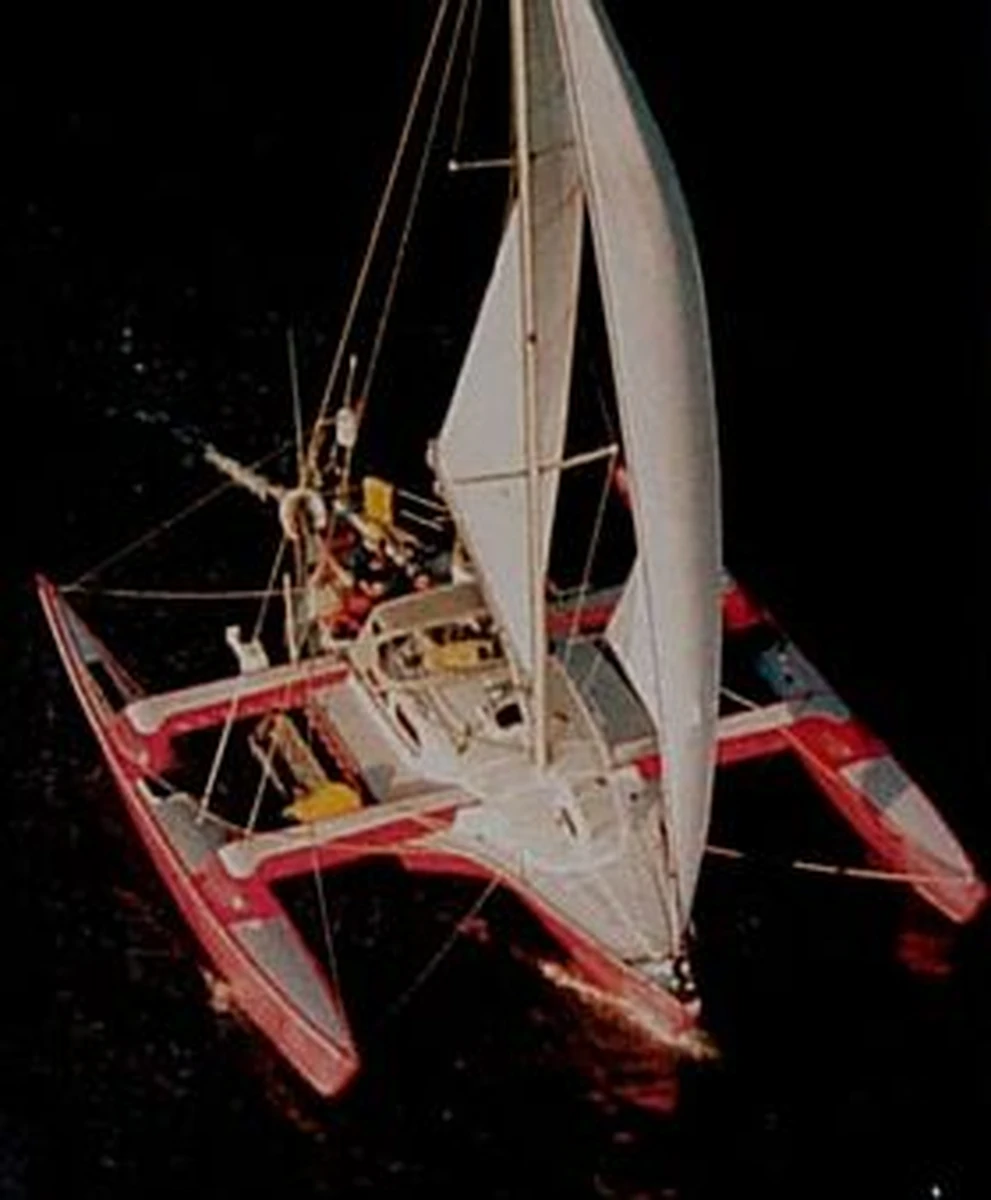
If you're interested in comparisons (e.g., vs. Contessa 32 or Folkboat derivatives), owner stories, specific listings, or sailing footage, let me know!70 sourcesContour 34 TrimaranThe Contour 34 (also known as the Contour 34 SC or Contour 34 Sport Cruiser) is a high-performance, trailerable folding trimaran designed for fast cruising, day sailing, and occasional offshore passages. It stands out in the multihull world for combining exceptional speed, shallow draft, and reasonable accommodations in a boat that can be trailered and stored on a standard slip or driveway.
Designed by Cole Beadon (a multihull specialist who also handled tooling construction), it was built by Contour Yachts (Erin, Ontario, Canada), founded by Paul Contouris. Production started around 1992, with the 34 SC introduced as an evolution of earlier Contour models (like the Contour 30). It was marketed as the largest trailerable trimaran with viable extended-cruising potential at the time, emphasizing performance while keeping trailering practical.
Key Specifications
LOA: 34.00 ft / 10.36 m
LWL: 32.00 ft / 9.75 m (some sources cite ~23 ft for displacement calcs)
Beam: 24.17 ft / 7.37 m (open/sailing); folds to ~12.5 ft / 3.8 m (trailered ~8.5–12.6 ft depending on setup)
Draft: Min 1.33 ft / 0.41 m (boards/amas up); Max 5.75 ft / 1.75 m (daggerboard/centerboard down)
Displacement: ~4,850–6,000 lb / 2,200–2,722 kg (very light for size, aiding speed and trailering)
Hull Type: Fiberglass (FG) trimaran with retractable/folding amas (swing-wing style for easy setup); narrow main hull (fine entry, plumb bows, elliptical amas); center daggerboard; twin rudders (often outboard or transom-hung)
Rig: Fractional sloop (rotating mast option in some); sail area ~670 ft² (high SA/D ~35 for excellent power-to-weight)
Auxiliary Power: Typically outboard (e.g., 20 hp Honda/Suzuki/Yamaha with electric tilt/start); small fuel (~20–25 gal), water ~20 gal
Accommodations: Sleeps 4 (V-berth forward, convertible saloon settees, optional single berths in amas); headroom ~6 ft 3 in; large cockpit, wide side decks, bridge deck; good ventilation (multiple ports/hatches); self-tacking jib option; simple galley/nav station
It's celebrated for blistering performance — owners report routine speeds of 15–20+ knots (with bursts higher in ideal conditions), minimal heeling (rarely past 10 degrees), dry ride even in chop, and great light-wind efficiency. The folding amas reduce beam for trailering/storage while providing massive stability underway. It's set up for shorthanded sailing, with features like a large cockpit, fingertip control, and heavy-weather capability (narrow hulls cut through waves well). Not a heavy bluewater "tank" like some larger multis, but capable for coastal/offshore cruising and racing.
Compared to your earlier queries:
Far faster and more performance-oriented than monohulls like the Contessa 26, Contention 33, or Constellation 44.
Shares trailerable/shallow-draft appeal with smaller classics (Springbank 15, Conga) but scales up to multihull speed and space.
Similar "fun factor" to the Conser 47 catamaran but more compact/trailerable and focused on folding tri design.
Used examples are rare but appear occasionally (e.g., past listings ~$59,000–$100,000, with one recent at $65,000 in Florida). Check YachtWorld, Boat Trader, or multihull specialists (e.g., The Multihull Company, Just Catamarans). There are YouTube videos with full tours (e.g., "Contour 34 SC Trimaran Full Tour" by Sailing Unleaded) and sailing footage showing its speed and handling — search for "Contour 34 trimaran" for owner clips.
If you're comparing to other folding tris (e.g., Corsair, Dragonfly, Farrier), want owner reviews, or need help tracking listings/photos, let me know!2.4sFast80 sourcesinclude production quantities and I, J, P, E measurementsThe Contour 34 (also widely known as the Contour 34 SC or Contour 34 Sport Cruiser) is a high-performance, folding trimaran designed for speed, trailerability, and coastal/offshore cruising. It features swing-wing amas (retractable outriggers) that reduce beam from ~24 ft sailing to ~12.5 ft folded (and ~8.5–12 ft on trailer), making it one of the largest truly trailerable multihulls of its era with meaningful liveaboard space.
Designed by Cole Beadon (who also handled tooling), it was built by Contour Yachts (Erin, Ontario, Canada), starting around 1992. The company focused on lightweight fiberglass construction with narrow hulls, a rotating mast option, and a self-tacking jib for shorthanded ease. Production ceased sometime in the early 2000s (Contour Yachts is no longer building boats, though the parent company shifted to custom composites).
Production quantities are limited and not precisely documented in major sources like sailboatdata.com or owner archives — it's a niche, semi-custom design. Owner forums (e.g., Contour34SC groups.io) and historical discussions reference hull numbers in the low teens to mid-20s range (e.g., mentions of hull #8, #16 in sales/videos), with estimates suggesting fewer than 30–40 built overall (possibly closer to 20–30 based on rarity in used listings and owner groups). This is far fewer than mass-produced folding tris like Corsair models.